Barb Stone Bakstad on the Recalibration of Midlife: “Champagne Is Still Good”
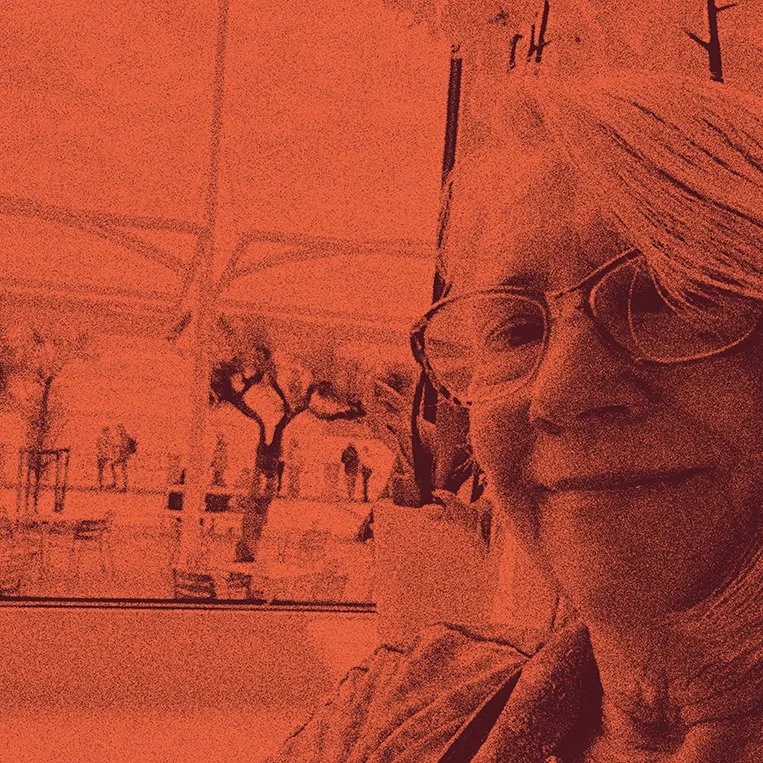
Photo courtesy of Barb Stone Bakstad / duotone by Hot Flash Magazine
Barb Stone Bakstad is a creative, coach, and champion of artists, splitting her life between Canada's mountains and lakes and the California desert.
“There's still beauty in your saggy boobs, or whatever else is uncomfortable or what you're moving through. It's still part of you. So love it.”
HOT FLASH: I would love for us to talk about midlife, and I would love to ask you questions around your interiour experience during peri and afterwards. This time is filled with questions of identity and emotional flux, and that's something doctors haven’t–can't–speak to. I think only in community, in circle, where those born in female bodies can mutually share and support.
Barb Stone Bakstad: I can be your auntie.
HF: [Laughs] Gosh, please and thank you. That's so beautiful. Let's start with this. Auntie Barb, for the readers, are you in perimenopause or post?
BSB: I'd be post; it's been 22 years. I had remembered when I was told I was in ‘The Change’, I thought I was pregnant. My daughter, my youngest, was 10 at the time, and she's 32 now. And at that time, my breasts were sore and I was sort of cramping. I was feeling kind of nauseous, and I'm like, ‘Oh, I'm pregnant.’ I was in my early forties, and even though my husband had had a vasectomy, I thought I must be pregnant, against all odds. So there I was resigned to the fact that I was going to start a later-life family and I went off to the doctor, and she did a test and she goes, ‘Well, actually, Barb, you're perimenopausal.’ I'm like, what? Immediately, I felt betrayed. My body was betraying me. I said, ‘No, no, no, I'm far too young to be menopausal.’
HF: Wow. What a surprise followed by another surprise! For me, I thought I had long-covid, and after years of struggle, and taking a plethora of supplements that may or may not have helped, I saw a naturopath who told me I was in perimenopause.
BSB: I didn't look at it as an ailment, so I never went to see a doctor. I just thought, oh, well, that's it. I'll just go through it.
HF: So there were the physical symptoms, what else did you notice in terms of changes?
BSB: Well, anger was definitely part of it. And betrayal. I felt betrayed by my body. I would be standing there dripping with sweat and I'd say, 'Just give me a minute,' or I'd dance a little faster and tell myself I was just sweating because of that. I would occasionally treat a symptom. But what I do wish I had done was pay more attention as my body was depleting–paid more attention to the possibility of calcium loss and bone density–and that I had done more weight training or physical movement, because now at the other end of menopause, I'm a different person physiologically.
Even now, I have to go down the road of figuring out what to do with my blood pressure.
"When you enter into cronedom, you don't have
to answer to anybody else but yourself."
—Barb Stone Bakstad
HF: And that's what you refer to as, like, the betrayal of the body,
BSB: Yeah, and being in denial, you know? And then before, because I was in denial, I said to myself, ‘No, this was natural. I'll just cruise right through it.’ If there had been more readily available resources when I was going through it, I may have responded differently.
HF: What were you angry about?
BSB: Oh, everything.
HF: [Laughs]. I get it. I'm angry with men.
BSB: Well, yeah, most of my stuff does come from men. That would also be the betrayal–and the men–and myself for not doing something about it earlier, not speaking up for myself, even saying to them, ‘Don’t PMS me. Don’t.’ It is good to be a banshee. Society is patriarchal.
HF: So the anger and the feeling of betrayal is not only directed at individual men, but also the whole system. And no, I’m not feeling anger because I'm PMSing, and actually, even if I am PMSing, I'm speaking with clarity here.
So on one hand, there's this anger. Through the process, did you feel more in touch with yourself and your voice?
BSB: I did. I felt more safe to speak out. You know, it's why they call it men-a-pause, but they don't like to be paused.
HF: [Laughs] Oh, this is so good.
BSB: It was a growing awareness. And it was like, oh shit, I should have done something before.
HF: You’ve said this a couple times now, ‘I should have said something before’, or ‘I should have done something before’. Is that part of the betrayal story?
BSB: Yeah, your physical body is betraying you because you've done all the right things. You think you're relatively healthy, you were a mindful eater, you kept the peace, and what have you. There was that layer of repetitive cycle, and for me, it was betrayal. In hindsight now it becomes very crystal clear.
HF: How does it show up in how you relate with women, or anyone moving through the world in a female body? Did anything change?
BSB: Well, I wasn't afraid to say what I wanted. It's especially even more so now, or in the past few years more in full on post menopause, it's kind of like, you don't like it, that's not my problem. We’ve been betrayed by men. But then you know, I was betrayed by some women too. I don't take the bullshit on.
HF: What do you think moved you from that fear of judgment, of being seen as uncaring, toward just not needing the approval anymore?
BSB: I had to really recheck in with myself. I had to ask myself, ‘What's the worst that could happen?’
HF: That's a really helpful question, because it puts things back into perspective. Our imagination can trick us into compliance.
I want to shift the conversation away from anger and frustration, into joy and delight. As you discontinuing the patterns of the archetypal pleaser, how has it opened up more capacity for beauty and joy?
BSB: Well, when you enter into cronedom, you don't have to answer to anybody else but yourself, and you allow yourself to give yourself pleasure. Whether it's art or creativity or travel or cooking, I am allowing myself to do that without judgment. It takes time, though, one step forward, two steps back. It can be all over the place. It's not realistic to cut out all the noise, out of society. It's fine to say that you're an individual or a hermit or a banshee or a crone or whatever, but you still have to fit within a societal something.
HF: How do you balance that?
BSB: I find places that I can tolerate the judgment within, so for me, I have to just go off and be by myself.
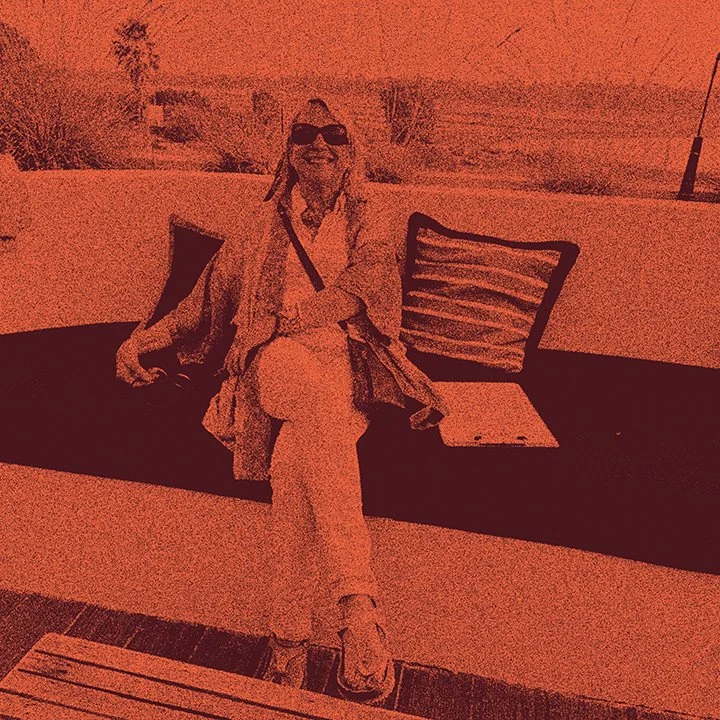
Photo courtesy of Barb Stone Bakstad / duotone by Hot Flash Magazine
HF: When I met you the very first time when I was at an artist residency working on my book of tea poetry at the Banff Centre, you radiated life, life force was pulsating from you. It was contagious. And thought to myself that you must have learned a few lessons along the way, because what I’ve realized is that one does not radiate with life in that way just by staying comfortable. In fact, sometimes too much comfort can cause entropy in a personality.
I'd love to just hear more about what gives you a sense of aliveness.
BSB: The more in nature, the more that you can actually sit and just be in nature, no matter where it is, and no matter what kind it is, notice it. Even if it's different, and even if I think it's ugly at that moment, it's still powerful. It awakens the deadness in me. I feel just as alive with the rot and the deadness or the stillness in the middle of the forest.
HF: It's so true. I really love what you said, ‘even if it's ugly’. What do you have to say for that person who's going through a process of rot and decomposition, and everything feels ugly?
BSB: Well, the first thing that popped in, is there's still beauty in your saggy boobs, or whatever else is uncomfortable or what you’re moving through, it's still part of you. So love it. Just love it. I think everybody's so self aware of physical prettiness.
But nature is beauty. Beauty is natural in my eyes, but everybody's striving for prettiness. So get comfortable with it and practice getting comfortable with yourself. I mean, that's what we should have been doing when we were six.
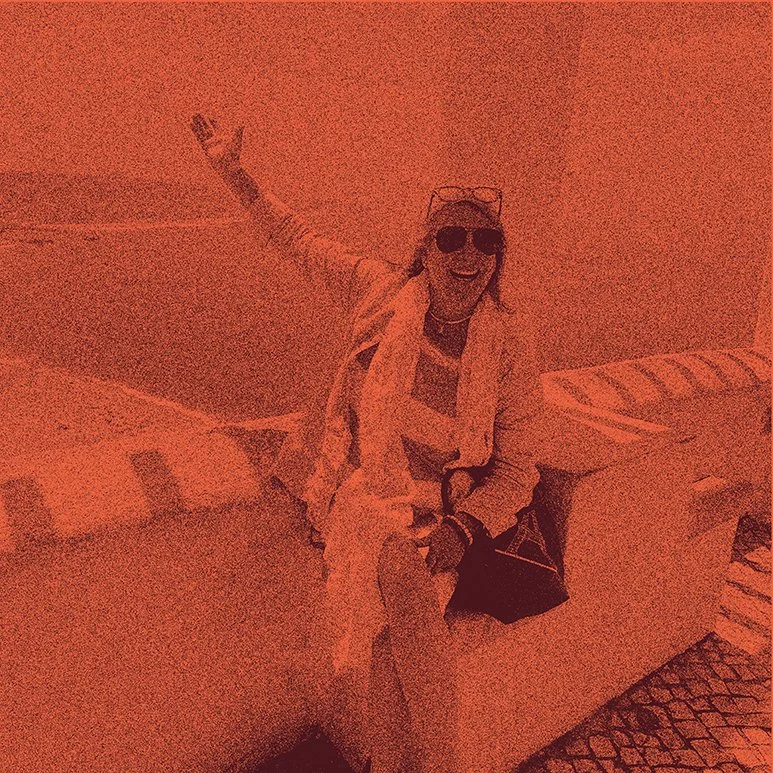
Photo courtesy of Barb Stone Bakstad / duotone by Hot Flash Magazine
HF: Yes, yes, yes. How do you get comfortable with yourself?
BSB: Oh, I get kind of hermitish, which isn't necessarily a good thing, but I'll look at myself and say, ‘You're looking not bad today’, or if I look shitty, I’m like ‘oh, what's going on there? I'll look again tomorrow.’
[Mutual laughter]
HF: That kind of humour is refreshing.
BSB: Absolutely. I'll just laugh at myself. But I can also go and hibernate and hide out and lay in bed for a week. There's nothing funny in that. But then eventually I come to the point where I guess I have to get up. You have to acknowledge your own ugliness, and just find that one little bit of beauty again, what you like about yourself, and what you like about your body, and say, ‘Well, at least it holds my organs.’
HF: I love this. What specific things do you love about yourself, physical or otherwise?
BSB: Oh, definitely my humour. I know I'm enough. I know I'll never be beautiful, but I am cute and that’s okay. What I really like about myself is the resilience and the ability to cut petty things or ego out.
HF: It’s a whole lot of commitment and practice, right? Humour is a skill and habit. Resilience is to be able to get back on the bike again and again.
BSB: I would agree with that. And just more of a qualifier, it's okay that not everybody has to be humourous, and if somebody wants to be serious or pragmatic or whatever their character is, and whatever their being is, yes, that's okay. Everybody else is allowed to do them. And if they want to be ‘oh, poor me’ or be in their woe, that's okay, too, but I'm not going to try to make them happy. I probably won't be hanging around, and that's okay.
HF: Did you find that that was something that became increasingly clarified throughout midlife?
BSB: Oh, yes, and it's the same for the overdoer. I'm like, ‘Oh, you just listed a thing that would take me a month to do, and you do that in one day or before breakfast.’ I've put myself into a situation now where I allow myself to do one thing a day, like I will put one major thing on myself a day. I admire people who have that energy level. I don't understand it. And the peri and post menopause is having to figure out how to recalibrate.
HF: Yeah, I'm in that recalibration phase, as I was that person before where all this stuff would be done and it's not even lunchtime yet, and I really took pride in my efficiency and productivity, but now I'm very tired. And I'm very, very tired on a Friday, I'm less interested in going out. Now, I want to walk away from my desk, have dinner and go to bed while my kids are still up!
Or even if I could go watch my kid’s soccer game, I don’t always want to talk, but I am worried I will appear anti-social…
BSB: And then the judgment starts. If I don't talk to someone, they're going to think something's wrong. I don't need that on top of everything else. If I can't just sit there and watch my kids run around without having to perform, I'm not going.
HF: We're raised to be polite, and a woman needing space reads as rude. The strange thing is, I don't think the other parents at the soccer field are even aware that other people are having the same thought before they even show up. I've been talking all week. I just need to not talk.
BSB: Find your own rhythm. Recalibrate. If someone badmouths you because you didn't show up the way they expected, that's their perception. That's on them. You have to manage your own energy.
HF: It's a little like trying to fill a bathtub when the drain is bigger than it used to be, and the tap is running slower. At some point you just adjust the bath accordingly.
"Fortify your health now,
for your aging years.
Listen to your body.
Listen to yourself. Trust yourself."
—Barb Stone Bakstad
BSB: And it shifts day to day. Post-menopause brought its own surprises. High blood pressure, which I never had. I always had low blood pressure. So there it was again, that betrayal. My body had already done the change, and now it was doing something else. You get inundated with it. Stroke, heart attack, silent killer. I don't want to just follow the prescription, take the pharma, take the drug, do the thing. But when you can't control it on your own, you're stuck in this whole push and pull, and the stress of that is probably making the blood pressure worse. It's hard to hold your truth when first you're being ignored and then you're told, well, this is just the way it is. You get through perimenopause and you think you’re being written off, even though it's actually the best time, because you don't have to explain yourself to anyone. Those of us who see more than the surface of things, we know other possibilities exist. But I'm still fighting with the blood pressure medicine. It makes me feel like a different person, and it isn't even working.
HF: You're touching something real here. I've had a whole life of doing what I thought was right. I exercise, I eat well, nothing processed, I hydrate. And I'm confronted by my genetics and biases. High blood pressure, cholesterol, blood sugar, all of it. I'm grappling with how much more I can adjust through lifestyle before I have to consider pharmaceutical drugs, and I have to own that I carry some judgments around that, judgments that are probably ableist, if I'm honest with myself. I'm coming to the realization that my genetics are going to have the final say.
Going back to the esoteric. Things can happen that are completely beyond our control, and not because we've invoked them. That's part of the beauty of spirit, whatever you want to call it. This exchange that occurs. I'm not being religious when I say this, but I want to use the word specifically. It's filled with grace.
BSB: Absolutely. You put it so much more eloquently than I would. So I guess it comes back to accepting with grace whatever you're moving through.
The more you focus on it, the more it lives in your head. But if you're just allowing it, you barely notice. We tend to check in when we hit a wall, when the anger comes up or the hopelessness, when something happens, joyful or hard. Instead of just asking, isn't this interesting? How can I make this more fun than it already is? And if it's not fun, that's fine; it means it'll be easy to make it more fun.
HF: Because the contrast is so stark. Small things impress me now in a way they didn't before. I've always loved flowers, but I can really lose myself in lilacs right now. We're in lilac season and I brought armfuls home. The scent is completely intoxicating; they take me somewhere.
BSB: Immediate smile, immediate exhale.
HF: Totally. It's hard to stay stressed around flowers. When I was younger I appreciated them, but not this way, not viscerally like this. I've been buying cut flowers for the house and I see it as medicine, my antidepressant.
BSB: Keep doing those things. Ask yourself, how does it get any better than this? And then let it show up. That's not a question for yourself to answer. It's an invitation. Let grace take over. The universe opens up and shows you how it can get better. Sometimes it's a flower blooming. Doesn't have to be a big thing. Sometimes it is, and you're like, okay, thank you.
HF: And I love what you said about the act of noticing. These lilacs have been on that same shrub down the block for years. You can walk past and not even see them, because you're not in that mode. Noticing is a practice. Noticing what's happening in your body, the change of seasons, whatever it is. I'm being made to do it more now.
BSB: You're being reminded. Maybe when we were babies, all we had time to do was notice.
Then as you get older, stroke becomes your focus. High blood pressure. You expected it from an older generation, and now I think, oh, fuck. I'm one of those older people now.
HF: We’re all heading to eldership, Auntie Barb. A closing question. What would you say to your younger self, the one standing in the doctor's office being told she was perimenopausal when she thought she was pregnant?
BSB: Fortify your health now, for your aging years. Do everything you can. And then don't buy into what they tell you has to happen. Don't buy into, oh, your bones are getting weak, here's your osteopenia. Don't buy into, I'm older so my cholesterol is going up. Keep eating the butter. Keep being in nature. Filter out the societal noise around looking younger or being somehow fixed. They'll tell you everything they fed you twenty years ago was wrong anyway. So listen to your body. Listen to yourself. Trust yourself.
And cut down on the drinking.
HF: I love this. All this profound wisdom, fortify your health, trust yourself, and then cut down on the drinking at the end.
BSB: Champagne is still good. Always.
HF: That is how we're closing this interview. Champagne is still good.
BSB: Absolutely.
HF: This has been medicine for me. Thank you.
◆
The views expressed in this interview are those of the interviewee and do not necessarily reflect the views of Hot Flash Magazine.
Barb Stone Bakstad lives her life as a creative in the arts and business in the western mountains and lakes of Canada and the desert of California. Barb’s passion and work is as a coach, champion and supporter to other creatives and artists. Barb continues to explore and hone her creative expressions in a multitude of mediums.
Follow Barb on Instagram.