Reanna + Mimi
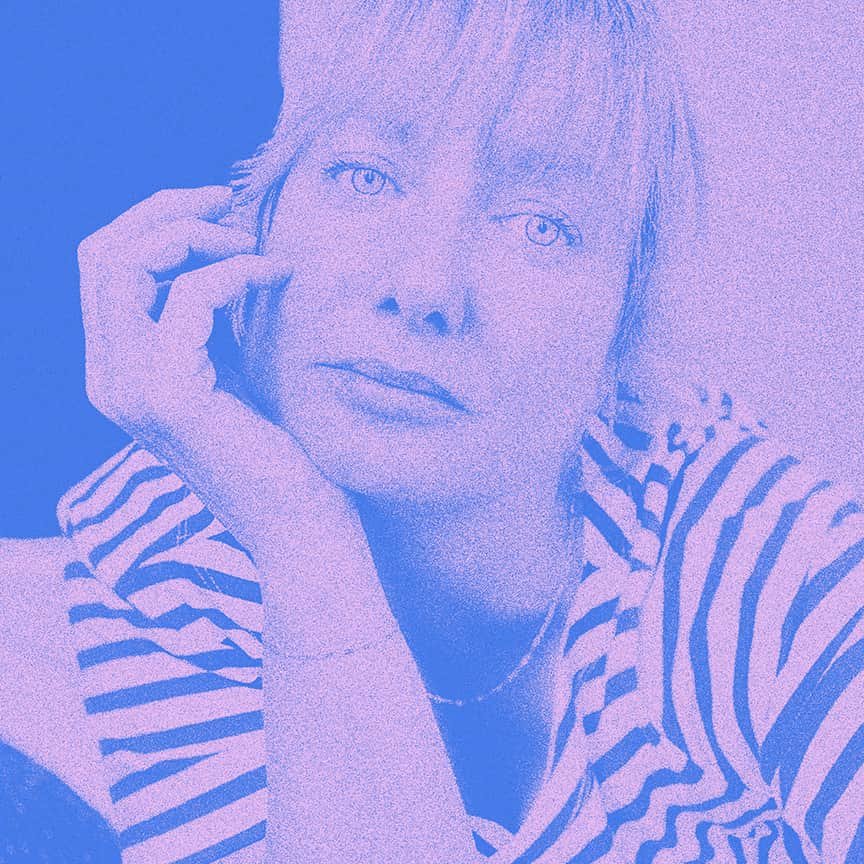
Photo courtesy of Reanna Evoy / duotone by Hot Flash Magazine
REANNA EVOY
Reanna Evoy is 48 and has spent 25 years shaping brands at the intersection of culture, storytelling, and visual intelligence. An award-winning creative director, she has led work coast to coast from Vancouver to Los Angeles to Montréal, collaborating with brands including Nike, Herschel, Kombi, and Aldo, and working alongside photographers such as Cass Bird and Tim Barber. Reanna blends strategy with an instinct for emerging trends, translating ideas across platforms with coherence and edge. Equal parts creative wizard and cultural translator, Reanna turns ideas into worlds people want to enter, products they want to live with, and creativity that endures beyond the moment. In perimenopause and firmly Gen X, her go-to karaoke song is anything Sonic Youth.
Follow along on @hotflashmag and @reannatime
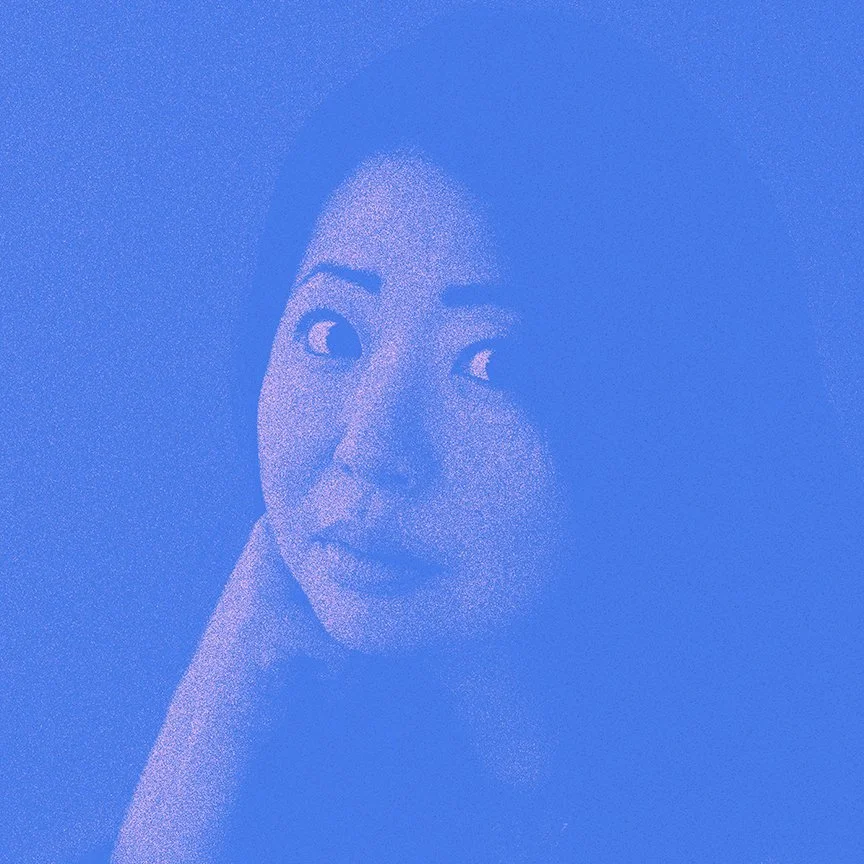
Photo courtesy of Katie Nugent / duotone by Hot Flash Magazine
MIMI YOUNG
Mimi Young is 47 and works at the intersection of strategy, language, and cultural pattern recognition. With over 25 years across communications, business operations, design, and SEO / GEO, she has built and scaled companies, bringing an operator’s understanding of how brands grow, pivot, and remain relevant. Her work spans early market identification through Kumon, curriculum design for literacy and numeracy organizations including CEFA, and her own esoteric brand, Ceremonie. Across these contexts, Mimi is known for predictive analysis, reading timing, and anticipated behaviour. A mother to a young adult and a preteen, and in perimenopause herself, Mimi brings cultural fluency to midlife with lived understanding. Nostalgia, for her, is Portishead, of course.
Follow along on @hotflashmag and @shopceremonie
Hot Flash is a journal, and community for people navigating perimenopause and the years of transition around it.
Where most resources centre symptoms and solutions, we make room for the less tidy that reflect the perimenopausal experience of unfiltered conversation, shared experience, and the questions of identity, emotion, and meaning.
We started here, with ourselves. Reanna and Mimi, co-founders, friends, and two people in perimenopause. It felt right to go first, not because we have the most to say, but because asking others to be honest in these pages required us to also be emotionally transparent.
We are both, in different ways, being remade by midlife.
Mimi interviews Reanna
Mimi: For our readers, Re — are you peri or post?
Reanna: Peri.
MY: Which emotions have shown up most for you during this perimenopausal passage (so far), and why do you suppose that is?
RE: Anxiety. Dread. Panic. Frustration. Anger. Free fall. Paralyzed. Tender. Heartbroken.
I have always been a happy person. So this is new to me.
Emotionally, it feels like a soft cloud of hormonal support lifted and dropped me onto the hardest concrete surface. The dissociation tactics I once relied on to cope my way through life are no longer available to me. I feel like I am raw-dogging life now. My tolerance is gone. Shape-shifting for others, performing the version of myself that keeps everyone comfortable, is much harder to do.
Life sometimes feels thorny and difficult to navigate. I feel less resilient and yet more resilient. I think it's because a certain softness, and the nurturer in me left the building. And navigating without the softness I am accustomed to has left raw fear in its wake. I didn't realize how much my hormones were protecting me. Or soothing me. Maybe a combo of both. I think I can look back and say, "Holy shit, I had to hold all that together for so long." It's exhausting.
MY: How has perimenopause compelled you to reckon with productivity and how has your definition of it, and relationship to it, changed?
RE: When I was younger, being busy was a coping mechanism, a way to numb life. If I stayed productive, I didn't have to look too closely at my own life. But it didn't take long for me to get curious about slowing down and refusing to subscribe to the productivity myth. This started way before Peri.
What I experience now is frustration. I want to slow down but nobody around me does. At least not in my North American reality. Everyone demands something from me. Now. More. Faster. Smarter. What is this, a Daft Punk song? My awareness of the hustle hasn't changed much with Peri. What has changed is my desire to push. When I think about it now, I want to be productive in enjoyment, in pleasure, in taking better care of myself. And what frustrates me is how hard that is when the rest of the planet seems to be operating at a completely different speed.
I notice I need to retreat more. I need to pull back from the capitalistic chaos more. I'm good with productivity if it means clearing space for life. But the moment it tips into all work and all performance, I'm out. It's bullshit. And I don't want to be told it's about age. Yes, I'm tired. But not because I can't. I think it's because I don't want to. And I'm done explaining. It's exhausting.
I do my best work when I can think and play. I don't give my best under pressure. And the way productivity gets measured, by speed and volume, feels fundamentally dishonest to who I am. And Peri has given me every reason to say that out loud.
MY: Would you say the pursuit of youthfulness, the pull of the male gaze, is itself a form of productivity? How has your relationship with your face and body shifted?
RE: Likely yes. Staying youthful costs time and money, and that is its own kind of labour. It could be seen as a performance. If it's not for yourself, who is it for? But I'd push it further, I think it's also about how the female gaze can operate under the wrong prescription of patriarchy. Sometimes I wonder if an aging woman is often less concerned with how she appears to men and more preoccupied with how she stacks up to other women. That's the real and underexamined pressure.
As for my own body and face, I have so much more grace now. I've gained weight. I have wrinkles. And I genuinely don't have many fucks left to give. For a long time I punished myself for not looking like the people around me. The shift has been from shame and punishment to something softer. Now I ask, "How do I take better care of myself? What does healthy actually feel like for me? What is my body asking for"?
MY: If you could sit across from your future self in postmenopause, what do you hope to see in her?
RE: Someone who listened. Someone who took better care of herself because everything does change. You get dry. Your bone density shifts. And so much of it connects back to hormones and to how well you tended to yourself along the way. So be the best mother, friend, and guide to yourself that you can be. Don't compromise on that. And please, find joy along the way. Do what makes you feel good. Speak up. Slow down. It's okay. ◆
Reanna interviews Mimi
Reanna: For our readers, Mimi, are you peri or post?
Mimi: Peri, for about 5-6 years now.
RE: You exist in a world between the living and the dead, the seen and the unseen. Does perimenopause feel like a threshold to you? And if so, what do you think is waiting on the other side?
MY: Perimenopause is a threshold of all thresholds, a mother threshold with dozens of smaller ones inside it. There has been no stone left unturned, be it health, friendship, ancestry, money, how I dress (elasticized waist pants), how I rest, what I consume, who I spend time with and give time to. I don't know entirely what's on the other side, but what I'm already meeting so far is a kind of profound self-belonging, a depth of permission I hadn't known I needed. The clarity I have now makes performing a managed version of myself something I can no longer tolerate. And by extension, self-belonging allows me to see another more clearly, too, including my beloved dead, and the unseen forces I’ve always worked with alongside. They also seem to trust me more.
RE: How has this passage changed the way you move through motherhood?
MY: I'm interested in the end game now, the patterns that take us there, much less on the daily operations, and much more on the daily moments. I've given myself more grace, and that's moved through me into how I am with my sons. Feminism and curiosity keep asking to be lived out rather than talked about. They've watched me relate to my own body and emotions. They've seen fierce tenderness and constructive rage when I've had to advocate for them in a school system that was repeatedly failing them. They've seen how politics, ethics, and witchcraft inform and hold each other accountable. We also laugh a lot together.
RE: We live in a culture that has no real ritual or reverence for this transition. What do you think that has cost us? What would you change?
MY: There is no initiation into this transition. And without that, without anything that gives meaning and context to what is occurring in your body and your life, the passage becomes a crisis and collapse you manage alone. The cost shows up as stereotypes of the desperate gripping of elusive youthfulness, the embittered hag. These are caricatures, but they are also constructions, societal warnings about what becomes of a woman who stops performing sexual primacy, productivity, and niceness. They exist to keep the terms of a woman's worth external, and never one's own. Attention, then, is perpetually distracted, perpetually grasping. Reverence for this stage, the kind folk traditions once held collectively, would free us from that exhaustion. What I would change is less a change than a return. Like a tree, we've been growing for a long time. I am learning how to enjoy my own fruit, share it on my own terms, let some of it fall and beautifully rot without guilt. A tree doesn't owe anyone its harvest, but a mature tree that grows in community casts shade, holds soil, and changes the conditions for everything around it.
RE: What would you go back and tell yourself at the start of perimenopause, when you didn't yet know what it was or where it was going?
MY: Keep talking to different doctors until one believes you. You’re going to be shifting from herbs-only to GIMME DRUGS. Prioritize sleep, peace, ease, and beauty in your daily life. Simplify your schedule. Ask for help. Some friendships will mature and sweeten, and others will not survive your clarity. Mobility workouts. Trust yourself. ◆