Randy Lee Cutler: Menopause and Making the Familiar Strange
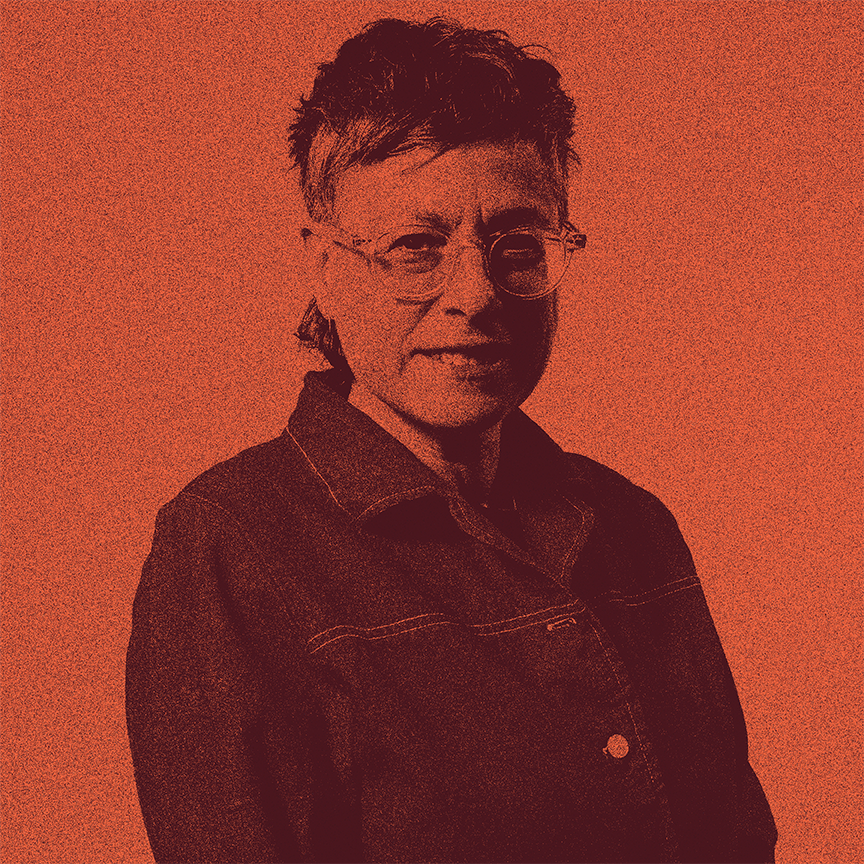
Photo courtesy Randy Lee Cutler / Duotone by Hot Flash Magazine
Interdisciplinary artist, writer and researcher. Post menopausal.
“ I began to realize that I don’t really have to answer to anyone but myself. I didn't feel that I had to prove anything and that let me rest within my own capabilities and decisions.”
HOT FLASH: For our readers, Randy, are you peri or post?
RLC: Definitely post.
HF: Perimenopause is sometimes described as a second adolescence, and not always charitably. But adolescence is also a time of self permission and differentiation from defaults. Has anything like that happened for you, a growth or liberation you weren't expecting?
RLC: There were some challenges during perimenopause but I would say that growth and liberation definitely came with menopause. It sounds like a cliché but I stopped caring what other people think of me. I feel like I came more into my own and just accepted myself.
I also believe that I became an even better person, friend, teacher and artist. I brought more love into my relations with people and the more-than-human world. By this, I mean loving the seasons, the trees, the birds and all the incidental things that I notice on my daily walks.
HF: Many describe a point in this perimenopausal passage where their tolerance changes; could be for relationships, work demands, or earlier versions of themselves. Did that happen for you? What choices did you find yourself with? What did it cost?
RLC: I began to realize that I dont really have to answer to anyone but myself. I didn't feel that I had to prove anything and that let me rest within my own capabilities and decisions. I suppose I let go of friendships that weren’t serving me. I have always enjoyed my own company but with menopause this has meant more alone time, meditation and reflection. I may have become more tolerant as a partner, a teacher and a friend. And regarding work, I have so much more experience in my responsibilities as an administrator and teacher. So I trust myself more including my knowledge, references and how I manage difficult situations.
HF: You've told me more than once, when I was in a difficult stretch of this, that it gets better. I'm still in those stretches, so I'm holding onto your reassurance. What does 'better' mean, and how does it arrive? And did anyone say that to you? Was there someone holding that for you while you were in it?
RLC: Unfortunately, I didn’t really have anyone holding that kind of space or support. But I did go through perimenopause with my girlfriend. Even though our experiences were different, we didn’t have to explain to a male partner what we were experiencing. In this way, there was a lot of compassion and understanding between us. But back to the first part of your question about what does “better” mean. No longer getting my period was such a relief. The unpredictability, the blood, the pain, the bloating, the mood swings, all that gone. What a relief to be outside of those endless monthly cycles. Admittedly, there were physical challenges with the change in hormones which included allergies to dust that lasted 6 years as well as a large fibroid that in hindsight made my body uncomfortable and in constant flux. The best part has been that my mental health evolved from being reactive to witnessing my emotions with a certain calmness and humour.
HF: You've spent your career inside institutions explicitly concerned with the formation of developing artists, and your own practice in collage is itself a medium of assembling and reassembling. As you moved through perimenopause, did any of that start to feel like a fractal, the same pattern played out everywhere?
RLC: Interesting framing of the question. Having written my PhD on Surrealism and science, I continue to embrace the unknown, the uncanny, chance and the phrase, “making the familiar strange”. So if there are any fractals or patterns played out, they might include looking out for the ineffable, the liminal or what might reside below conscious awareness. I am interested in what isnt being said but somehow reveals itself in the affect, the energy in a room, the awkward gestures and the silences. This is as true for making art as it is for mentoring young artists as they find their voice through aesthetic experimentation and play. Play is always important, as is surrendering to not knowing.
HF: If perimenopause were a weather system, what would it be? Or has the forecast changed?
RLC: I think it might be inclement weather ahead which may include windstorms, atmospheric rivers and general unpredictability. The forecast has definitely changed. On the one hand the skies are generally clearer and the air is fresh. But even on those inevitable unpredictable days, I appreciate the changes in temperature, the need for specialized footwear and the opportunity to embrace what might unfold on a give day.
HF: What would you go back and tell yourself at the start of perimenopause, when you didn't yet know what it was or where it was going?
RLC: There will be a lot of changes in your body that you won’t understand.
It’s the hormones shifting their chemistry and wrecking havoc with you. It will feel like a series of tests to your patience and your threshold for unpredictability will expand in response to what your body throws at you. What may seem difficult or too much to bear will be a blessing. That’s not hyperbole. There are silver linings, emergent embodiments and ways of not knowing that will set you free in ways that you can’t imagine or find words to describe.
◆
The views expressed in this interview are those of the interviewee and do not necessarily reflect the views of Hot Flash Magazine.
Randy Lee Cutler is an interdisciplinary artist, writer and researcher attentive to themes of collaboration and materiality. Working with a range of artistic strategies, she is invested in how science fiction and science fact highlight an emergent understanding of lived experience. Follow Randy’s work can be found on randyleecutler.com, or follow along on IG @theoryisland