Gris Alves: The Best Thing That Ever Happened to Her Was Getting Older
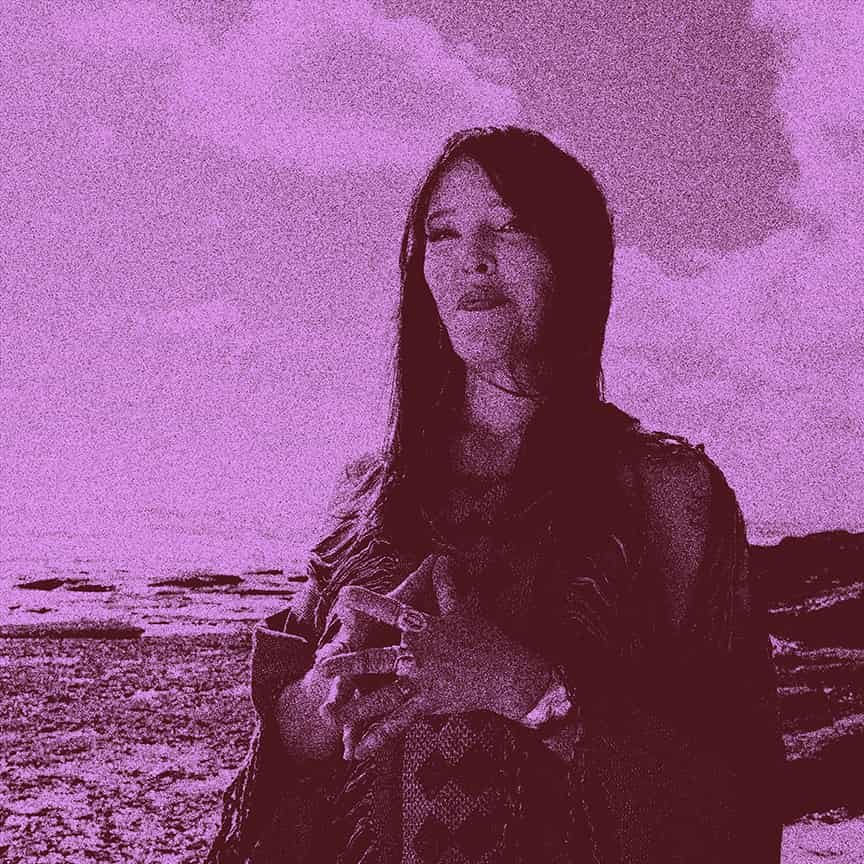
Photo courtesy of Gris Alves / duotone by Hot Flash Magazine
Trauma-informed healing guide, ceremonialist, psychedelic assisted practitioner, host of the Spanish-English podcast, Tales of Recovery. Post-menopausal.
“…And now I go by the mirror and I'll see myself, and I look in the mirror and I'm like, oh my God, I love you, and you look amazing.”
HOT FLASH: For our readers, Gris, are you peri or post?
Gris Alves: I am post. I'm 56, and I stopped my moon around 49, 50. But I didn't even think about it. It wasn't such a big thing, like it is now today. I had already had an eight-year trajectory of moving away from a career I didn't like and a lifestyle I didn't like. The hustle, hustle, go go go, compete, compete, kids in every fucking soccer, baseball, horseback riding. I had already decided that wasn't something I wanted to do. So I really slowed my life down way before perimenopause. I was doing what I loved. By the time I realised I wasn't getting my period anymore, I had already quit my job. I was already doing my retreats and yoga and coaching and mindfulness. And then I was in hot yoga every day, sweating and sweating and sweating. So I never experienced hot flashes. I don't know if it's because I was already sweating it out, or because I was in a space where I kind of liked my life. I have a feeling that some of it is physical, but I think a lot of it is also: are you liking your life, or is this a portal to wake the fuck up and change?
HF: So you came into it having already done a lot of that work. But post brought its own initiations.
GA: I didn't really get the perimenopause. But post? Oh, girl.
About a year after my mom died—I don't know if it was the hormones or just one year of grief—I completely lost my mind. I had really felt her when she passed. I would be breathing and I would be like, oh my God, she's breathing, really sensing her. And then right at her one-year anniversary, I just said she was gone. My daughter moved out. And then I was like, I'm getting a divorce. That's it. I'm done with this marriage.
I was in bed, depressed, pissed off at everything. I was watching The Crown because there was nothing else to do. And I'm like, this is the most horrifying, depressing show in the world, and it's all a fraud. And my life is a fraud, and so is my family… everybody's pretending. And I was like, I have to get a divorce.
So in that way, looking back, this was kind of my initiation. My mother died—you think, well, I'm going to die next, the grief of it. My daughter moved out. And I think a lot of the way I process things is, I don't identify them in the mind. They just kind of happen to my body. Sometimes they make sense six months later.
HF: I want to ask about just being so frustrated with men, particularly the ones we're married to.
I tend to oversimplify it and have the knee-jerk response of fuck the bastard. But you also asked yourself, what's my role in this? I think the other thing related to this idea of over-functioning is — when we run out of eggs and we're not able to have more children, we're seen as disposable. That's why the younger woman is more desirable through a patriarchal lens: she is fertile, she can make babies, that's the expected production. Men get to just exist. There are no conditions. And I think that's what hormonally, emotionally, spiritually, we're being initiated to just exist too. I exist for me. That's it.
Do you think post-menopause is a portal where we really need to ask ourselves: how do we want to be seen, and are we giving ourselves permission to be seen? Because a lot of times I would do things not because I wanted to, but because that's what a good woman does. I have an identity as a high-functioning woman, and it shows up everywhere — with my husband, my parents, my children, my friends. It would be kind of nice to be a flaky, selfish bitch for once. It's almost like we're sick of the identity we somehow created, or allowed to be created, and then we want the permission to say no. What did you realize about yourself that you weren't giving yourself permission for?
GA: Looking back now, I think that was the portal opening. Physically I was okay; working out, eating right, taking supplements, meditating. But what came through me after one year of my mom's death, and realizing why am I married to this guy who doesn't even get me—it was many, many years of overdoing for the relationship. Maybe I didn't get hot flashes and I didn't have the classic perimenopause symptoms, but one year into post, when the whole divorce thing came up, I felt a huge desperation inside me. I need to get out of here. I need more. I can't do this anymore. I told him, let's do counselling. He just wasn't having it. I wanted to run and be free by myself. I was going to sell my house and go up in the mountain and just fuck it all—kids, family, business, all of it.
Another thing that happened—and I'm going to mention this because it might be a body shift thing, not medical at all—I had implants put in when I was 30, because I was drinking the Kool-Aid. And then like ten years later, I'm like, I hate these, I need to get rid of them. One of them had gotten super irritated, like a little crust that goes all around it. There was something in there. I had the surgery, and after surgery I was like, what a relief. A lot of things started to flow physically after that, inflammation gone, no pain. But I also think that's kind of when I started moving towards, I need to get out of this marriage. I need to do something.
“For me, it has been a very spiritual journey.
Not as much physical.”
—Gris Alves
GA: There's physical things I could talk about—like if you take progesterone, you're going to sleep better. The obvious stuff. But my conclusion, and I'm telling you now at 56, is I've never liked or enjoyed my husband more than today. It's been a crazy past two, three, four years of me just trying to dig in and do the work. We ended up, of course, not getting divorced.
This journey into post-menopause has been softening, softening, softening. A slowing down. A turning down of the demands—like, you have to look like you did when you were 20. No, I don't. I mean, I still like to work out, I'm still in yoga and moving, I just want to be strong enough that I can run the sweat lodge and pick up the abuelas, the rocks. But the mindset that has shifted in me has been a slow understanding of the programming, the conditioning.
HF: Did you at any point consider that midlife is a gift?
GA: I have to constantly remind myself it's a gift to be on this crone road. My wisdom is a gift. My experience. And I love to hang out with younger women and be like, no, you don't need to say yes to that if you don't want to. I'm seeing this different point of view, this different perception of love and longing for other women. Versus maybe when you're 35 you're still kind of competing with the one next to you, or at 42 you're like, oh no, their kids are doing better than mine, all that dumb shit. Now it's just like, no. I just want to have fun, sit by the fire and talk with my friends.
I want to love my body, not beat it up anymore. Talk nicely to it. I've been talking nicely to my body for over ten years. I don't know how long it takes to get it 100%. I'm better. But it's a constant awareness and focusing on: I'm okay, I'm good, just because I exist. Period.
GA: One of my mantras is, I don't care.
I do not give a fuck anymore.
I would much rather be at home by my fire than go out. Before, I would have been like, I cannot not show up—I committed and I will do exactly what I say. This past two years, I have been the biggest flake ever, and I don't care. And it's not like I don't care to be rude. It's just I'm going to put myself first now. If my body wants to chill and rest or go down the street to the beach instead of showing up at that function, I'm going to do it. There's a lot of freedom in just deciding.
I've read a bunch of books on witches and herbalism and the menopause years, and a lot of them say this is the time where, okay, yeah, you don't have eggs to produce another baby, but you can now birth whatever project you want. Or nothing—just sit around and do nothing. Because for the first time in many, many years, I'm okay with sitting around and doing nothing. I crave the weekends where there are no plans.
Photo courtesy of Gris Alves / duotone by Hot Flash Magazine
HF: What do you do when you're doing nothing?
GA: I'm writing music, so I'm playing the guitar, I'm singing, writing songs. I'm actually recording some songs now. I've been sewing—I got a little sewing machine, I made these patches of my logo, went to a sewing class and made a jacket. Upcycling. And a lot of times, you know, my house there's always a party. So when I'm doing nothing, I'm sitting out there talking to Julio. The kids come by, some neighbours come by, my friends come by. There's usually a fire with friends at the house probably two, three, four times a month. I'm gardening. And I intentionally leave my phone out when I go out to do nothing—I was just in the ocean for a couple hours without the phone. Usually I'm like, oh, let me put this on Instagram, everybody come to the ocean. And I'm like, no. Reading too—I've actually read two or three books in the past month. I hadn't read in years. And yeah, sometimes I just sit there and do nothing and look at the sky.
HF: I love you saying this because it's so normalizing for me. I'm normally the kind of person who will organize things with friends, research a restaurant, make a reservation, invite people over. I've literally just said I'm not doing this. I don’t want to be the only one who carries the friendship. It needs to be reciprocal. My theme now is less effort. What I've really realized is I need unstructured time. And it makes me wonder—has modern life been so over-programmed that we actually don't realize what it means to have unstructured time? This is naturally what we're supposed to do. But the whole programming is: what's next, what's next, are you producing, are you producing.
GA: 100%. And it's been a process of the past two years of saying I don't need to produce. But I'm not going to lie—I'm also noticing who's showing up. People are always over at my house. But I'm not getting that many invitations to go over to theirs. I'm not going to over-produce in that area anymore.
HF: That's a big thing I've realized too—with certain friends, unless I initiate, the friendship doesn't actually happen. I don't feel good being the one that's holding and making it happen. I want to create a garden together with my friends. Together. And if not, then this is not the kind of friendship that's right for me right now in this season.
GA: And instead of, oh no, I can't believe this—it's more like, oh well. It's actually helpful information.
I now know which friendships to focus on more. It is a little sad to realize, oh my God, I've invested all these years of effort into these friendships, the ones that don't reciprocate.
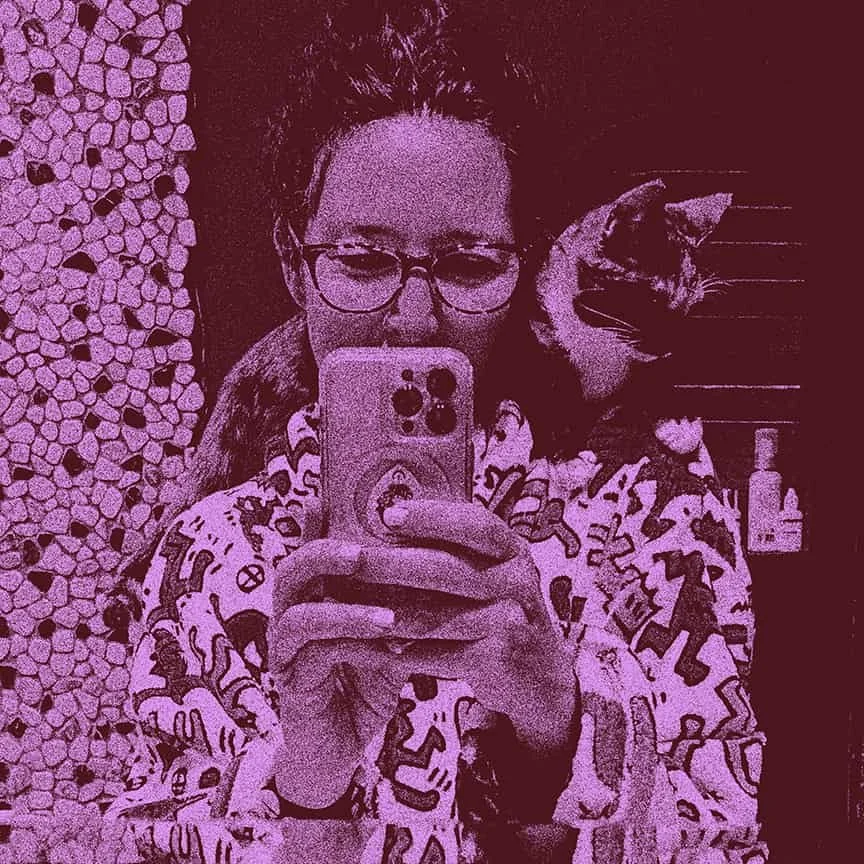
Photo courtesy of Gris Alves / duotones by Hot Flash Magazine
HF: It's important to acknowledge all our emotions, the easy ones and the ones that are harder. When that happens, how do you not take it personally?
GA: I do take it personally.
HF: [laughs] Thank you for saying that. Because that's the hard part for me. My heart will get bruised. But then it gets internalized, and I'm like, oh, what's wrong with me? Even though I know my mind is like, Mimi, you're being dramatic, there's nothing wrong with you. You can't help but feel hurt.
GA: You can't help but feel hurt. Which is a little bit of the grieving—oh, I thought we were besties, and you have 50 other besties, and I'm not your real bestie. So I do internalize it, and then I have to do this whole process of, it's not because there's anything wrong with me, it's just people are in a different consciousness and doing their own thing. There are seasons for tight friendships, and then seasons where you're not going to see them. And internalizing it for me is like, okay, now let me get really curious about this. Yes, I'm grieving and yes, this sucks, but also why? What's deep down in there? And then sitting with some mentors and realizing, okay, this is a childhood wound. She's not my mom abandoning me.
HF: Do you find yourself judging your friends who don't have that ability to go deep? Because that's exactly what I do. After processing, after being angry—because that's kind of how I grieve—I'm ready to go a little deeper. I talk to some spirits about it, do whatever spiritual or emotional process. But that's a lot of commitment. An investment of time and money. And then you see some friend who just wants to keep it at this comfortable level. I'm not saying she's fake or superficial, but you can tell where there's a difference between what you can tolerate as discomfort and what she can. There's a limitation in what we can talk about. They can only go so far, whereas I am okay going into the valleys, I can go into the caves, I can go underground. And that prevents me from feeling seen.
GA: At some point, after processing, after being angry, I realized not everybody wants to go that deep. Not everybody has that capacity. It's hard, it's hurtful and painful. And on the other side you're more resilient, more open.
It is also a lesson of acceptance — of that, and of self-acceptance. That I love myself whether they meet me where I'm at or not. I'm not going to shine less because they'll feel uncomfortable. No more negotiating these relationships. But that's why I love talking to you — let's go deep all the way. I'm intense, and I like being intense. I don't think I'm too much anymore. This is powerful.
HF: I want to redirect the conversation a bit, because you talked about your body—you've been saying kind things to it for a decade and you're still not 100% there. I bet there are parts of your body that you love. You mentioned lipstick earlier. Do you love your lips?
GA: I do. I love my lips, I love my eyes.
For a while I would look in the mirror and be like, oh my God, I'm looking more and more like my mother. My mom was beautiful, but the last two years when she had a stroke, she just looked like a little old lady, and it was very intense to see her, because I had never seen her like that. But she didn't give a rat's ass about fixing her hair. She was just like, whatever, with the stroke — which was very liberating for her, actually. We had the fake nose rings because she wanted to try it and couldn't get a real one.
And now I go by the mirror and I'll see myself, and I look in the mirror and I'm like, oh my God, I love you, and you look amazing. And if my mom kind of shows up in the picture, I'm just like, Mom, look at us. We're doing great.
◆
The views expressed in this interview are those of the interviewee and do not necessarily reflect the views of Hot Flash Magazine.
Gris Alves is a trauma-informed healing guide, Earth-based ceremonialist, psychedelic assisted therapist and Compassionate Inquiry® Practitioner with over 30 years of experience in addiction recovery, grief work, and ancestral healing. A revolutionary Mexican immigrant woman, Gris walks the path of resilience, truth, and love—offering embodied wisdom rooted in lived experience and deep spiritual practice. After beginning her own recovery journey at age 25, she has since become a trusted guide for others navigating the emotional roots of pain, addiction, and disconnection. Gris teaches that addiction is not a disease, but a response to unresolved trauma, grief, and unmet emotional needs—and her work compassionately supports people in reconnecting to themselves with presence and self-love.
She is the founder of AWARE, a mindfulness teaching organization; host of the bilingual Tales of Recovery podcast; a volunteer with the Prison Yoga Project; and a member of the healing music ensemble Las Amanitas del Norte. Her voice—both literal and metaphorical—reaches hearts through ceremony, song, and storytelling. You can find her latest song recordings on all music platforms as Gris Alves, La Niña del Encino.
Follow Gris on IG: @grisalvesand @talesofrecoverypodcast. You can also find Gris on www.grisalves.com