Kate Shela on Perimenopause: A Meat Grinding Initiation
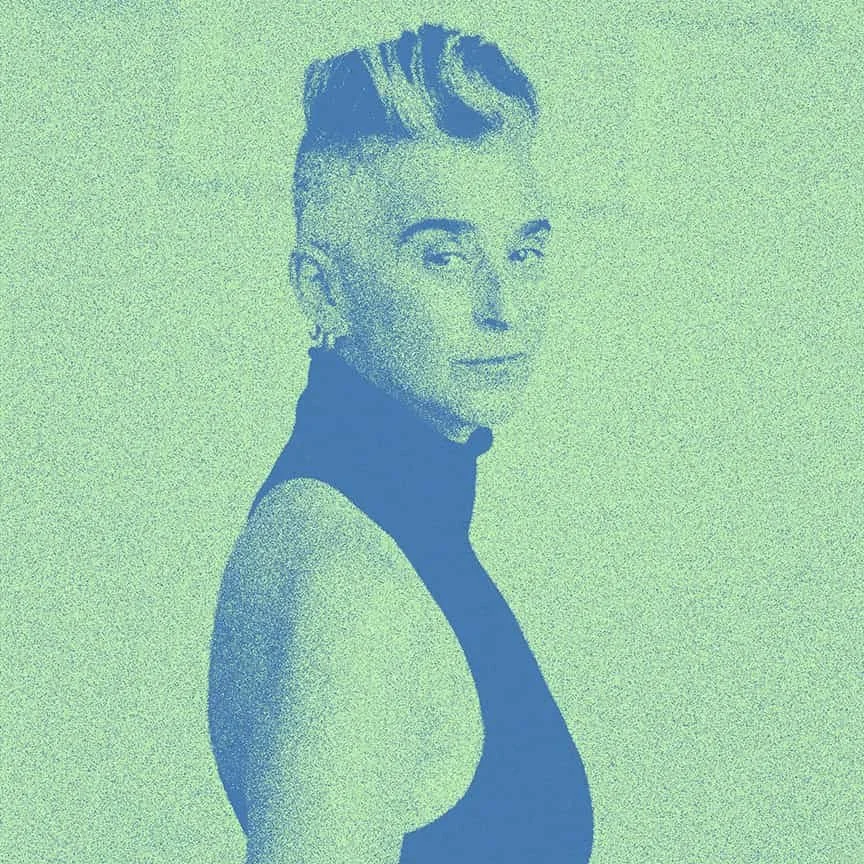
Photo by Sarah Prykril, courtesy of Kate Shela / duotone by Hot Flash Magazine
Public health servant, movement maestra, co-founder of The 360 Emergence Embodiment Practice, DJ. Most menopausal.
“…perimenopause turns you around, looks you straight in the eyes and says, "Head backwards, because what's demanded of you heading forward will demand every piece of you. Retrieve and return.”
Hot Flash: Kate, for our readers, are you peri or post?
Kate Shela: I am a menopausal woman. I have not bled for nearly four years.
HF: Before we started recording, you were talking about the indispensability of female friendship through this passage—the kind with real commitment and agreements behind it. Can you say more about that?
KS: Female Friends were what got me through. And when I say the word ‘Friend’, I'm talking about long-term, committed relationships, with agreements to support each other no matter what. I know without any doubt, without my women Friends, with a capital F, I would not have survived the last 10 years on any level.
The perimenopause and the menopausal journey are a shamanic soul retrieval death experience. It is the calling back of all your essence parts that you have lost along the way. It is a new beginning, which is also a death and an ending. A sheroic journey. A call to individually and collectively face the very painful. It's a reinvention time. It's a deep healing time.
The perimenopause says, "FYI, you're an adult now. And you have to turn all the way back through your timeline and really look and feel. No matter how much you've prepared up until this moment, no matter the work you've done, all the life experience, the therapy, the workshops, all the initiations — you must now travel back through your whole life and pick up all your pieces, gather all the children that you were and that you had to leave behind because they couldn't leave home at those particular moments."
The perimenopause turns you around, looks you straight in the eyes and says, "Head backwards, because what's demanded of you heading forward will demand every piece of you. Retrieve and return."
: That lands for me personally. If I were to use the need to withdraw from family and obligations as my own marker, perimenopause started years before any of the physiological signs. Before the first hot flash, before the insomnia. That need to get away from my husband and my children started in my late 30s, maybe five years before anything physical showed up in my body. Do you think it starts earlier than we're told?
KS: Susan Weed, the well-known herbalist and writer, talks about how perimenopause can start much earlier than we realize. And before we go: oh, this is happening, or I'm feeling this. My friends were either predominantly raging, or in deep lamentation, where we hadn't fully been with fury or grief in our own bodies and the collective body, the collected stories.
If our monthly bleed was honoured in the global workforce—and at least one day a month you could take the day off of work, no matter where you work—it would be a game changer. Women could rest, listen and nourish. Spend a moment recapitulating their last month and integrate it all. I would often be traveling and teaching a workshop on the first day of my bleed. It is the most magical time to teach and to see, and on the other hand, parts of me wanted to be in bed eating hamburgers and chocolate and be left alone in a dark room. Our blood is the body's great signpost—it tells us what's really going on.
I think the perimenopausal journey is about becoming a huge black dragon. It's a metamorphosis, like puberty, or having children, profound rites of passage that have no context in day-to-day western culture and can be very shocking to many who have no framework or support for what could be in store.
And so Mimi, what you are creating with Reanna with Hot Flash is phenomenal, because we're at a very different time and everyone of all ages needs to know and discuss this. This reframing and new orientation of the perimenopause and the menopause. It's a huge crossroads time.
My mom, who's 90 this year, had no education for what she was going through 40 years ago.
HF: Perimenopause had no space for conversation. It was so private.
HF: Yes, it's tender. And wobbly. And yet I've never felt more courageous in my life, never more certain about my anger and rage. The anger and the rage functions almost like a compass—it signals what is so wrong with society. It's not out of control, it's not consuming in that way.
I hate using this word because in my community it's overused and often out of context, but it is truly an alchemical process. This refining of what do I stand for, who am I, and all the things I haven't given myself permission to name and say and be.
KS: Fully. It's an alchemical experience—literally. Your hormones are on a rollercoaster. You are a changing woman. You do not know who you are anymore. It's a big myth-busting moment.
The righteous anger is reclaiming parts of ourselves that have been in service for a very long time. I come from a traditional Jewish background and I did not meet the tribal expectations. I disappointed the tribe. I had to disappoint them to set myself free. And that level of dogma is in my epigenetic system—how do I unlearn that in a beautiful way and not hurt myself, and stand for so many women around the world that have been so badly treated and are being mistreated. The racism, the misogyny. What Gisèle Pelicot represents is a tip of the iceberg, the Trump-Epstein files—all the masks are off globally to see the atrocious death cult.
And how do we not get dragged into that hole that is only going to suck the life out of you. It's about dosage and taking one's measure. I think the perimenopause is about learning how to truly balance, rest, open and close, learn how to sometimes do no-thing. For those of us that have been driven by vision, to be able to go—I can't.
KS: There was a lot of shame, and a lot of nervous breakdowns—severe breakdowns in my mom's generation. Women who really lost their minds in the pursuit of claiming their minds and finding their voice.
HF: Totally, and also in the pursuit of being a good woman.
KS: Yes, the good wife, the good daughter, the good mother, the good person.
HF: I know that was what broke my mom in many respects. And it doesn't help when you have a very defined definition of spirituality as well, so everything she was experiencing—it was like there was this list: did her local church approve it? If the church approves it, okay, then permission to name and feel it. If not, suppression, suppression, suppression. So all these pressures. And for me, in many ways my mom didn't teach me, but by her not teaching me, that became the education.
KS: I think that's the case in life, though, isn't it? We go looking for what we did not get at home whilst growing up. My mom, bless her, is an extraordinary human being. She definitely had a few breakdowns in her lifetime—and she would now say that they were absolute breakthroughs. Soul retrievals. When she went through the menopause, she had a complete breakdown and she went to a day centre and did art therapy, talk therapy, movement therapy, and for her it was this moment of gathering herself, picking up her bones. She was held in a container for nine months on a daily basis. She stepped out of her day-to-day expectations in her multiple roles because she could no longer function in that way, and she emerged refortified with a sense of who she was and what she needed. She reflects back to this pivotal moment to this day. From that point on she really started investing in her own boundaries, joy and needs, alongside being a mother and a wife. She was a very visible person in our community and during her breakdown, people were repelled. I witnessed that as a teenager—people thought what she had was catching, it scared them. We all learnt a lot as a family. And now, thankfully, it is more understood. It is us, it is we.
The writing piece I shared with you today, called Anxiety, [is a newsletter that] went out to my global community—I have had so many responses, saying: oh my god, you too. You feel that way too. You struggle too. Thanks for letting us know.
Being human feels like the tenderest task. Like a peach with no skin.
“I remember a period of time where I just did not want to cook. That button switched off and the men in my household were like, what? And then they just got on with it, because I had fired myself from that job.
And now my genuine love of cooking, creating delicious and nourishing food has returned, but it's not coming from a place where I've got to make breakfast, lunch, and dinner seven days a week for the family. It's not the unpaid, relentless work and duty.”
—Kate Shela
HF: I am so grateful you brought this up, because I never thought that was also a perimenopausal symptom in my life. Prior to this year my favourite place to be was in the kitchen, or the grocery store, or the farmer's market, or my garden—doing the food things, foraging, fermenting ciders or cordials with elderflower. I did those things.
KS: Oh wow, you are that woman.
HF: And I took so much pride in feeding the family, seeing them enjoy the food, gathering friends and family. Now the only thing I want to do in the kitchen is load the dishes into the dishwasher.
KS: [Laughs]. So I think that's what happens—you really feel the full weight of the ball and chain of domesticity, the death of repetition, the death of a domestic life. You realize you have much less resources and patience. You can no longer be the contortionist, the acrobat, the human pretzel.Yes, we could say it's the hormonal change, and I also think it's maturity coming in and saying: enough! You have been nurturing and breastfeeding everyone else and time's up on that. All those duties, the unpaid duties, the undiscussed ways that we have cared and tended to our families—whatever the family system is. So how do we talk and negotiate, and have these really tricky conversations—how do we adapt and update the home systems settings and find balance and compromise? A family is living in an organised community. Families can feel very lonely and isolating.
HF: There are a few facets to this. On one hand I considered Martha Stewart and Julia Child iconic and in many ways aspirational—presented in a certain way for business, and it's not to discount their talents. But there's almost a virtuosity in myself, that I can do this, my family needs me, and this false belief that who else is going to do this if I don't. And what I realized is my husband is an amazing cook, completely unflustered by it when he comes home from work and just starts cooking and feeds us. It gives him pleasure, and it brings me relief. It's shifted that shadow side—the good woman's shadow side is the martyr, and I've realized I don't need to be either.
KS: I think perimenopause and menopause made me realize that in some ways I was this perfectly trained Jewish robot wife—literally, turn me on and I will hoover, dust, sponge and clean. And I love beauty and order. But my partner and my two sons were asking: where is this actually coming from? Do I want to do this? Do I enjoy this? It looked like it just managed my rage. And they did not need it or demand it. So I had to unpack that. And I was supported by the men in my family to be more messy, to not be so perfect, to not have it all sorted, to ask them to help me rather than getting angry with them. Perimenopause throws everything up in the air. Whatever level of perfection or avoidance you've been functioning from, you have to meet those different parts and needs and listen to them, and with time blend them in—it gets messy. You meet all the real vulnerabilities and the super strong elements of who you are.
I've always been a napper. I was brought up to know that napping was absolutely vital, and I really began to spend a lot more time when I wasn't working just in bed, really needing a lot more time to sleep, to dream, to not do anything, to be alone, to be quiet in the dark, withdraw, to not have a plan. And my body—I was in so much physical pain when perimenopause really kicked in. I felt I was made out of glass, that I would shatter at any moment. The level of physical vulnerability and pain was nothing I had experienced before. At 46 I'd never had a severe injury, and here I was a movement teacher, and I couldn't even bend over and touch my toes. I couldn't walk from the kitchen to the bathroom without being terrified I was going to splinter into a thousand shards. So that was the beginning of: oh my goodness, I am so vulnerable. My sensations felt like a moving python—I would have one symptom, and then another, and then another. My feet hurt, I was hot, I was crying, I was sweating, my shoulder throbbed, my joints ached—like PMS on steroids. That level of profound insecurity was a bubbling brew, and nothing felt stable.
HF: Yes, that's me. It's hard to plan. Prior to the current phase of peri, I would always schedule my calendar one month at a time based around my menses, because it was consistent—I would know on day 26 to day 28 I'm not going to be really high energy, so I would deliberately close my books those days, not have client readings and events. But now it's any given day. My cycle right now, I'm in flow, it's early, and it was precipitated by spotting, which is not something I normally experience. How am I going to plan and schedule my work if I don't know how I'm going to feel?
KS: From my experience, the perimenopause is a shamanic meat-grinding initiation. It was a 10-year process. And I am in a whole new terrain now as a menopausal woman, and that is also unfolding and a revealing education. During peri there were many highs and lows. I felt like life took me by the scruff of my neck and she said: come here, and whether you like it or not, we are going there, in there. And it was excruciating at times. Even for those of us who are up for transformation, teach it, talk about it, try to walk it and are up for facing the difficult—when you're in your initiation, you are in it, totally. You are humbled. Simple truth. It's like being in a fire pit, it burns like hell, and all you can see is the fire. That is the metaphorical archetypal alchemical cauldron called life and living. No one gets a free ride.
And every now and then, you're blessed to have your besties and your girlfriends, your partners and your community and some random strangers jump into the fire with you and go: I know exactly what you're going through, and I am here with you.
So that sense of allegiance and companionship is the lifeline—it is the healing. I have a group of women, across the world, my pirate sisters, that any second I can call upon, and they are there. That had to be established from the get-go of my perimenopause.
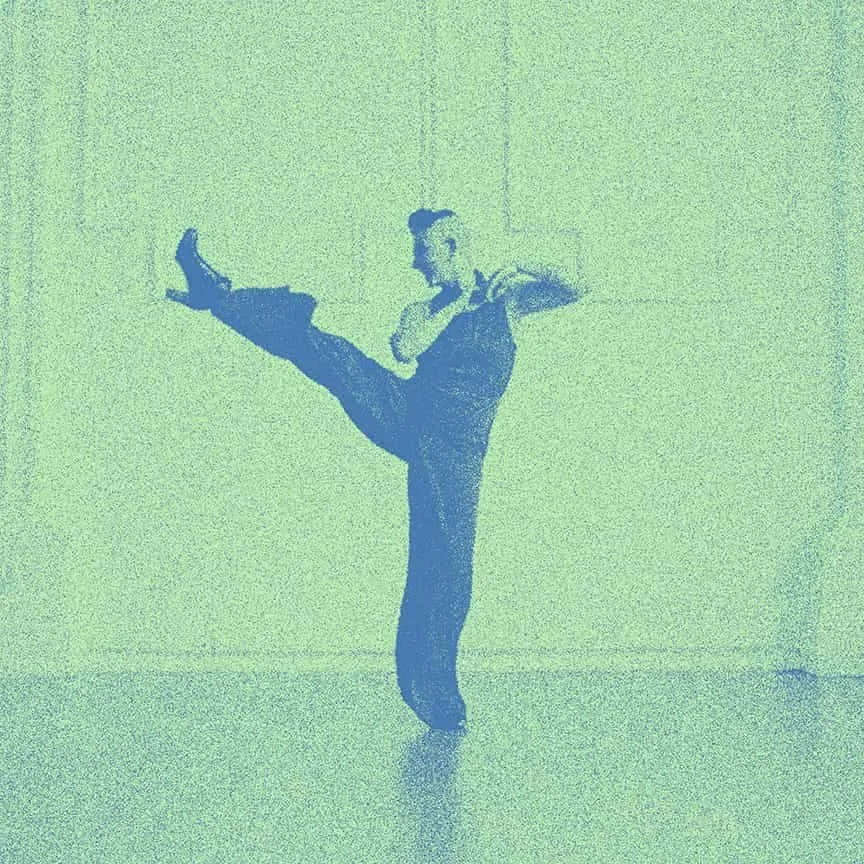
Photo by Sarah Prykril, courtesy of Kate Shela / duotone by Hot Flash Magazine
HF: Did you notice a shift in your friendships as you traversed that terrain? And what were the qualities that you realized you needed?
KS: I've always had amazing friendships, I've been blessed with that, and I devote a lot of my time to feeding my friendships. I know without community I would perish. It is as vital as food, water and shelter.
So when peri really took off, I knew: if I don't allow myself to be more vulnerable, if I'm just the one that is available to be supportive but actually unable to go—I'm dying here—then I'm basically a bullshitter. And that's what really came online: these women were like, we want to be here for you, but that means you have to be vulnerable with us. So that was the first thing I felt called to attention—can I risk being a total mess, ashamed, doubtful, scared, not have it together, and just show up and say, I need help. Really taking away any pretense and sharing what was more hidden, private, more unknown and unseen. The stuff you might write in your diary, or maybe say to that one bestie who's never going to leave you, because you've known each other since you were 16. I was called to presence by this group of fearless women who said: we want you to be fully yourself with us, we want to see you, we want to hear you and cry with you, hold you and laugh with you, and that means showing us the parts of yourself that you only share in the privacy of your mind and bedroom. I am so blessed that I had a group of women demanding that from me. Fierce love and caring kindness. And the agreement was that they would do that too and we still do to this day.
HF: And were they also navigating perimenopause, or perhaps some of them were even post?
KS: We were definitely in the perimenopausal boat together. It is also important to mention that all of us chose different paths. It wasn't like, well, I'm doing it this way so you should do it that way. Different imprints through life experience, race and philosophies made for varying decisions—for us it was about how can we keep gathering the information we are learning or experiencing and share with each other. Just like when you're pregnant, or when you fall in love, or you miscarry, or you get divorced, or a parent dies. There's so many opinions and perspectives during these massive rites of passage, when actually what you just need is to be loved and listened to and have time to discover what is right for you, and to trust and be trusted that you're going to navigate this — and not in the same way as everybody else, because it's such a unique terrain. And you will fall down and you will try things and hopefully you will get up again and find your way through within a container of care and patience.
To HRT or to not HRT, to leave your partner or not, to burn everything down or to build everything anew, to take antidepressants or not—there's so much that comes up. The more information that can be shared from personal embodied experience, the more people can make their own wise choices.
And if we were concerned, the agreement was that we would speak directly to each other. It was a time of coming into coherence, congruence, clarity and communication—all the big C words. There was this deep sense of sharing and caring. And regular gatherings, needing to sit together and be together, and also have fun together, as much as sit around the fire and be in grief for all that we knew we were somehow losing and discovering. What I also witnessed—just like when people have children—there were many divorces. With both my straight and queer friends. With kids or with no kids. This hormonal gateway changes everything and everyone, every relationship, everywhere, personally, professionally, locally and globally.
These are archetypal landscapes.
Who am I? Who are you? What do we have in common now? How can we update and renew? Can we? How do I meet my personal transformation and my calling and offering in this world? Because now we are really different people.
HF: Yeah, I've seen that in my friends too. The changes are seismic.
KS: Yes, seismic and gigantic. We are shaken. We are the changing woman, with our different sizes, our new smells, our new insecurities and our new confidence.
HF: You mentioned the physical body earlier—the pain, the joint changes, the way your relationship to movement shifted. I want to ask about self-expression too, because eventually I want to get to clothes and fashion. It's all connected, and I'm having a really hard time figuring out what I like to wear now. How did your own relationship to your body and how you present it start to change?
KS: I'm still in that discovery phase because I'm a bigger woman—that's true in so many ways. The first thing that started to happen was physical joint pain—head to toe physical pain—it was shocking and constant, and then emotional pain. As I said earlier, it felt like I was in a meat grinder on a daily basis. What needed my urgent attention. Where I was incoherent, where I had betrayed myself, where I had let myself down—where I had to begin to take full responsibility for loving myself, for taking care of myself, for becoming an adult. All these things that sound so easy to say: love yourself, take care of yourself, take responsibility—they sound so simple, and they seem to be the most difficult and advanced task. And that's why you and I are professionals in the way that we are, because we want to offer keys and share the places where we know and where we don't.
The physiological, the neurobiological, the mythopoetic was a full-blown shamanic initiation, and I will be steeped in some of those teachings for the rest of my life.
The level of vulnerability that I now feel is my liberation, and is congruent with how I want to be wherever I am—whether that's on the tube smiling at strangers, or teaching a class where someone's having a really difficult moment, or caring for my elderly mother, or having a heated debate with my sons and husband. How do I find the middle path of grace and kindness? How do I learn to be still, to be patient, to stop?
Shout and shut up.
And with all the embodiment work that's happening in the wellness industry—my colonized body, my internalized misogyny, my internalized self-hatred, my terror of the manosphere, the level of misogyny and racism that I might be perpetuating in my own body or outside of me without even knowing it. How do I wrestle with these huge bodies of work in my little small body and not blow up? The level of gentleness I've had to traverse is radical. It's an endless committed journey. And there was a moment last year, around my 55th birthday, where I felt I had arrived at an internal space I'd been longing to get to my whole life. An internal sensation. I was occupying my body. It was simply oh, I've been digging in the concrete with a teaspoon all these years, getting out of my own internalized prison, or the prisons that have been put upon me, and I can exhale, feel free and perhaps I can begin, again.
A reframe.
HF: So what are those qualities like, where are you right now?
KS: I'm really clear about the non-negotiables. The beginning of the end of self-sacrifice. Certain things that are absolutely, absolutely a no—will not, won't, cannot ever again. And that is a new place for me. In the last 10 years there have been some endings, some very graceful, some abrupt. I have arrived into the suburbs of my wisdom. And of course there are places that are mutable and fluid. And I know more about what my limits are. I might not honour them all the time, because that's also a work in progress, but I can feel them actively present in my body. My body won't lie as much as it was able to. We are communicating way better. What was once a quiet, internalized, faraway, numb sensation is now a foghorn shouting my name.
HF: Yeah, I don't know how to convince myself anymore. Before I would say I'll deal with it later, or I would rationalize it. I'm really noticing it no longer works.
KS: And that is the fire to attention—it's like, if a child was running out into the road, you'd shout, you'd run and grab them back to safety without thinking. The fires that we don't tend to—that's the hot flashes too. They are for many women the first inkling the perimenopause has started. It makes me think of the fabulous song: Mind on Fire by Aisha Badru.
I'm on HRT now so I'm much more harmonious, but if something very emotional happens, the hot flush will come in as a signal: oh, this means a lot, passion, pause, notice—or it can come in as a warning, literally a red flashing light: alert, prick up your senses, tension, notice. And some of this depends on how relational and friendly you are with your own body. Whether we know it or not yet, we are in communication with our bodies the whole time. We just need to turn up the volume and listen, because it's available for everyone. The signs and the repetitions of what we've traversed our whole lives—we all have our cycles and our seasons, we're all on the big wheel with our life lessons. Sadly, some of these themes will never change, and many will gather context and understanding. My prayer is that we get to midlife and we go: okay, it's that thing again. Take a moment. Stop, breathe, pause. How do I want to respond? What do I need? Can I communicate that?
HF: You've built a career around facilitating movement—you know your body, you know bodies when you see people gathering and moving to music. And I have built a career around the occult, around the unseen, around mediumship and witchcraft. And sometimes I'm like, none of that matters, because I'm still needing to be in the muck. I have the tools—like you said earlier, at least we have some—but I've really seen the tools humbled. It's like the Trickster is laughing at me. I'm the Fool. If I didn't have to experience the pain it would probably be quite humorous, but because I'm in it, it's totally not funny. How did you reckon with that? Because there's this "I should know better" component.
KS: So much of my life from very young was seeing the unseen—ghosts, the magical, the ordinary and the extraordinary. So there's a real meeting place between the two of us in that realm. But the truth is, no matter what your tools, your practices, who you are, where you are, what you know, who you know—you're going to be humbled. It is that straightforward. It is not a matter of if, it's simply when. All of our sheroes and public icons will too. It was fantastic when Michelle Obama spoke publicly about her hot flushes—having to hold huge meetings and deliver speeches and needing to change her soggy clothes whilst in a limo. It doesn't matter who you are, you are going to go through this at some point, and how you navigate it is unique. That's why I say, if you don't have good friends it is going to be tough.
And the global healthcare situation is not supportive at all. The money we are spending privately to get listened to—whether it's for HRT, medication, alternative health care or talk therapy—is utterly outrageous. And let's not even discuss the cost of good healthy food. We're all spending a fortune on getting the support we need for our basic human functions, and in terms of the menopause we know that about 48% of the population are going to go through this. Honestly, I want to pull my hair out and scream, and I'm privileged enough to have access to a doctor that is helping me feel better. And I have lived between the USA and the UK for decades, so I know something about different systems, and the systems are broken.
The worst terrain of perimenopause is that you don't want to be here—the suicide ideation that can come in, the depression, the loss, the grief, the who am I? I don't recognize myself and some of my nearest and dearest don't recognize me either. And we are dying in present time in the throes of the process, and have to navigate the onslaught of the bullshit toxic hetero patriarchal normative Hollyweird disrespecting culture, that judges our aging wise female body, getting bigger, and discovering our true identities—my brain actually stops functioning at this moment, because it just makes me want to cry and scream again.
How many women I know and don't know are suffering in profound ways at this moment of huge transformation. Who feel alone, mad and isolated. It should not be this way. We have to reach out to each other.
HF: I had to go through four different medical doctors before I was believed, and the one that did believe me, I had to pay for out of pocket. Everyone seems to think that Canada is perfect when it comes to healthcare—it is not. I had to see a naturopath who finally believed me, after that long process of being rejected. And I was even told by one doctor who insisted on calling me a "girl"—he said I might just want to take a week off work and do a little exercise to relax. He also said that a lot of women have gone through this without anything and were fine—referring to my mom's generation. I just couldn't.
KS: Talk about righteous anger, right there. There is that moment where in hindsight you might have leaned over and grabbed him by the scruff of his neck and pulled him up in the air and said: what are you talking about? And I am editing myself on my actual real response to that comment.
It's a heartbreaking time, because women are not listened to in so many ways, and there's so much misogyny and disrespect for aging and changing. And there is this rage that has to emerge to create the change—anything that changes globally and locally has come from outrage, from outspoken, raw and righteous, truthful, brave, transformational rage. Which at its core is passion. We are the generation of women that are changing it for the next generations. I have 20-somethings, and young mothers in my life and I'm talking about perimenopause. I'm preparing them. Including it. You get your first blood—you should be initiated into the blood ways, the perimenopause and menopausal cycle too, and know that this is your trajectory. Once you start bleeding, you need to look at when you will no longer bleed—not from a place of grief, but: wow, look at your timeline as a woman. All the places you will traverse and all the choices you can make. Known and unknown places. All the beautiful secrets you will hold and be told through your monthly moon time.
So much has changed these last 10 years. All these new languages are emerging.
It's wonderful that you are starting a magazine that's going to be based on the wisdom that comes from this rooted time in our creativity, our potency, the unknown, the sourced power, the grace, the outrage, the vulnerability, the potential, the support that so many need. It will be a lifeline.
HF: I hope so. Part of the reason my creative partner Reanna and I are doing this is because we need it. We want to centre voices and bodies that are or have gone through this and continue to go through it in some manner. I have this thirst for wisdom, and a kind of generative disruption that we have not had access to. And we're experiencing challenges along the way—it's really difficult to find bodies being represented through art, through fashion, through media and literature. Yes, there is now a small niche of women over, I would say, 60 predominantly, but it's limited—the women being presented are still really lacking in body shapes and size. They're all very thin older women, which is also very unrealistic. As I continue to make choices around pants—it has to be drawstring or elasticized pants for me, I can't wear jeans anymore. And then, what about the person like me? I don't have visible wrinkles yet, but I'm also not 20 anymore. I don't see people like my body being represented. Gravity is starting to have its say on me, but I'm not 60 or 70. And then of course there's the racial piece.
KS: Yes, and that's also something that I really need to express. As a second generation Eastern European Jewish white woman who grew up in London, my hormonal experience is different from my African American friends or my Asian friends. It's not one size fits all in terms of how we experience this time. And different experts need to be heard. How do we bring more information to the vast global community and share resources? That has been really important for me—to share as much information as possible so women have choices to explore. When your body is going through so many changes and you want to feel good, but you don't know who you are anymore, and nothing fits the way it used to, and you don't recognize yourself—the loss of identity is across the board. And obviously that is when we all need support nets. Mycelium of care.
And getting bigger—what it is to be a bigger woman. I remember one of my elders saying to me that the culture loves very skinny women because the culture loves women looking like children. This was 10 years ago, and it was a holy shit moment. Women are not children. And we could discuss this and rage and grieve for hours.
HF: Exactly. And with all this Epstein stuff too—how twisted it is to ask bodies to look in a way that is no longer natural for that life stage. And I'm not critiquing naturally thin bodies, but as someone who historically has been very thin, I'm looking at myself going, that's extra flesh that I did not have before. And for me, I'll admit that there's an ableist component that has come up that I've had to examine. I've had this bias around oh well, bodies are this way because maybe they weren't eating properly or moving enough. And there's ableism in me around medication, like I had this belief prior where you only need medication if you don't know how to take care of yourself. That is of course totally untrue, and it's forced me to view the world with a lot more awareness, and a lot more compassion, and a lot more fierceness against the very biases I used to have.
KS: That's the thing—you realize all your own internalized biases and where they come from.
I was on 20 vitamins a day when I started peri, and they were not helping the specific symptoms and I was spending a fortune, feeling dreadful. I went to see this phenomenal doctor at a women's health clinic in Los Angeles, who'd also been a midwife. She was in her late 70s and she said: I'm really sorry to say, but those vitamins are not going to bring your hormones back. And she said, it looks to me like you feel ashamed that your hormones are doing what they're doing. And yes, I did feel that way. She gave me my first tube of testosterone cream, and it literally sat in the bathroom for two weeks, because I was so embarrassed that I'd got to this stage of my life. I was older. My body was letting me down. I was just an ordinary woman like billions of others. My internal judge was saying: your body should be able to do what it's always done.
I'd been blessed with really good health, blessed with being able to move my body in an incredible way, and navigate stress, and suddenly nothing helped.
I couldn't Down Dog if you paid me.
And I remember my husband and my two sons saying: please, just try the cream, and if you don't like it, you can come off it.
And so I did, and within two weeks I felt completely different. The aches disappeared.
HF: Yeah, and that's shocking. I've always been very critical of the New Age wellness industry, and part of it is because part of my work has always been interested in turning every stone. And once again, a deeper confrontation of how I was also in some ways drinking the Kool-Aid that was very ableist and completely ignorant of body and medicine, and also binary—there is nothing wrong with being on HRT and also getting acupuncture. You don't have to choose. But for some reason in my mind at one point I thought I did. And the wellness world telling you otherwise is just another layer of the good woman trope—a different flavour, but still all these invisible expectations.
KS: And I think for your readers, who come from very diverse backgrounds and experiences—it's really about what works for you, what makes you feel good, what brings pleasure back in. Maybe trying new things. I know elders in their late 80s who are micro-dosing psilocybin and it supports their anxiety and depression. Whatever you're choosing to do—may it help. I have friends doing extraordinary things at this time of life, adventuring into whole new ways of being brave. Perimenopause comes in and goes: you've got to take everything off the table and look at it in a fresh way and heal. The push starts to shift and the wisdom begins to emerge. It's a remarkable journey of amazing grace, which also includes amazing rage, amazing joy, amazing grief, amazing presence. A time for very strong sensations, and much re-aligning—what are you meant to be doing with your short life? Because you suddenly get to midlife and you go: whoa, I might have 30 summers left. In 1900 the average western woman lived to be 42 years old, just as she was meeting her grandchildren. Now we live for so much longer. So you hit perimenopause and you go: I'm midway. How do I want to spend the rest of my life? What am I dedicated to? What's my devotional practice? How do I prepare for this—the calendar of your own energy, and how you want to invest it in what's urgent and important.
HF: I've been asking this question in almost every interview, and I see a similar thread running through the answers. I'm now learning to ask for specifics too, because everyone says I'm cultivating more joy—but what does joy look like? You said goodbye to the peri caboose four years ago. How do you envision your life now, and what are you moving toward?
KS: I seek coherence and that is a daily practice. There's a definite simplification and distillation—a maturation. I've been blessed to work in my passions since I was a teenager, including when I worked in the fashion industry. I've been blessed to make my passions my vocation. So for me it's how can I keep showing up in service to what I'm in service to? And I adore being in rooms with people exploring being human through movement, music and presence. I foresee that continuing for a long time.
Personally I'm taking way more care of myself than I ever have. What I really want to be eating, how much I really want to be resting, reading. I've started going to the gym—I've never gone to the gym in my entire life—I know I need more strength now, in all ways. I am trying something brand new, being challenged, doing something I find hard in a caring way, and I want to move into my elder years feeling resourced and honest. I feel in devotion to my physical body in a new way, and I've always played with my creative body as a way to understand life.
I've expressed so much of my life experience through my embodied heart, my art, and I am feeding my psyche, my spirit in new ways. I'm spending more time writing, a lot more time being with myself—it's got much quieter. It's an amazing sauce that's delicious. I'm being rather than doing.
I would also say that I have daily death rituals. I honour dying and must have prolonged ritual time every year to die and be with the no-thing.
HF: In many ways it's an adjustment based on other things that have happened prior to this stage, or maybe just a recognition that the stage is going to need to look different—the fall is going to have to look different than the spring.
KS: I feel like I'm stepping into the richest part of my life. My professional creativity and clarity is fully available to me. I know I can walk into a room and see what is needed and that whatever shows up is absolutely in service to the room. There's a real sense of maturity and self-trust. I live my creativity, so it's not a separate thing. For me it's about cohesion—may it all be congruent. To spread as much beauty, love, kindness and passion as possible. May we mourn and celebrate together. That's just who I am—even in my most sad states, put me out on the street and I will want to meet your heart. I will want there to be some level of connection, because now more than ever we need to have that between strangers. For me to say I respect you, I see you, I love you, I wish you well, and I don't need anything from you.
HF: So true. I really interpret that as letting the divine speak through us, being part of this reanimation of what life is, and a stranger is also potentially akin. Okay, last question. If you were to speak to that self prior to entering into perimenopause, or just at the start of perimenopause, what would you say to her?
KS: Hold on and let go simultaneously!
The times where you really want to give up—hold on and trust. Even if it's with one pubic hair!
You are the river and you will need to create banks. You need to know where you begin and end.
Go forward and really share deeply with your extended community as a teacher and the women close to you. Really invest in your friendships like you've never invested before.
And rest!—Tricia Hersey, who created The Nap Ministry, has been a guiding presence. Resting as a political act. Letting go of the grind, which is a big thing to say to women who have young children, are single parenting and are working nine-to-five jobs and may have more than one job.
Prioritize quiet time. Ask for help!
Spend time in and with water.
Laugh, celebrate and injoy.
And devote time to your magical poetic artistic devotional practices—for everyone that looks different. For me, I committed deeply to my devotional practice with my altars, my ancestors, my prayers and the earth-based spiritual path of the Red Road. Deepening as a student with my Ecuadorian teacher Carmen Vicente, who is bearer of The Art of Altars, Sun and Spirit Dance Chief, Founder of The School of Secrets and Guardian of the Vision Quest.
It is vital to descend into the darkness where all the answers live. The darkness, in the shamanic sense of the word. So I can really see. It holds me when I am in the darkness in the psychological sense of the word, and those two places need to merge and make love to each other, because one has to serve the other—as there will be moments where you will go crazy, but that doesn't mean you are crazy. It just means you have to get lost to find out who you really are. And you have to create a supportive environment of humans around you that will stick with you through thick and thin for when it gets ugly. Without that, I wouldn't be here. Really, I wouldn't be here. The people that loved me and didn't flinch.
I also want to say there can be so much competition and comparison in this experience — you're not looking like this, you're not doing it like that, you're being stubborn, why aren't you getting the blood work? We have to trust that people are going to find their own pacing in their own time and way. And that requires a lot of patience. Finding women that are going to honour you for your own journey is vital. We are here to care for one another.
HF: Yes, the competition piece—that's internalized patriarchy. I've had to confront it, and also, like you said, let go. I hold on to certain things, and let go of other things.
KS: Absolutely, and letting go doesn't mean forever—it might just be temporary. I couldn't do yoga for five years. My body just wouldn't. It hurt too much and said no way, and it had been one of my great loves. And I had an amazing yoga teacher, Sybil Buck, who always talked about the aging body and taking care of it even when we were in our 30s. And peri just wouldn't let me do it.
And now I have returned, with a new body awareness that includes the possibilities whilst honouring my limitations. So there are temporary losses. And some absolute deaths, and there are returned gifts from a new vantage perspective.
HF: Temporary losses and absolute deaths. The absolute death: I can't stay up past 9:30pm anymore.
KS: On sleep, I think we need so much more dreaming time. During the perimenopause my dreaming became medicinal—guidance dreams. I'd wake up and remember I had been told to eat beetroot, or sit in a field of flowers, wear red or make chicken soup—real direct instruction. So being aware of how you are receiving information is of import, and really trusting your own intuition, and if you really don't have that, then finding people in the community that you can trust to guide you back onto that track. How do we help people find their own embodied knowing?
HF: Yes, their voice.
KS: Yes. Thank you.
◆
The views expressed in this interview are those of the interviewee and do not necessarily reflect the views of Hot Flash Magazine.
Kate Shela is a public health servant. A movement maestra + embodiment plumber + Epic DJ. Teaching radical movement since 18. Taught The 5 Rhythms for 23 years and co-founded The 360 Emergence Embodiment Practice. She weaves the real and the passionate into transformational life retrievals. Kate teaches internationally, sees individual clients + offers online experiences. Has worked with countless A listers and ordinary extraordinary humans from all walks of life. Think peaches in crocodile skin. Cashmere and concrete.An embodiment plumber. A Rebel to all that no longer serves. Brave and vulnerable. Effervescent. A catalyst with heart who creates life retrievals.
She’s a seer of re-member-ing, of reshaping pathways that access what’s essential. She drops into the belly of listening and draws out the innate healer in each of us. Bold and improvisational, hilarious and tender. Known for changing your life.
Follow Kate on IG at @therealkateshela or visit her at kateshela.com